
Wet Hulled
Wet hulling, known in Indonesia as giling basah, is a processing method closely associated with Sumatra and other parts of Indonesia. It developed as a practical response to the region’s humid climate, where drying coffee completely in parchment can be difficult and slow.
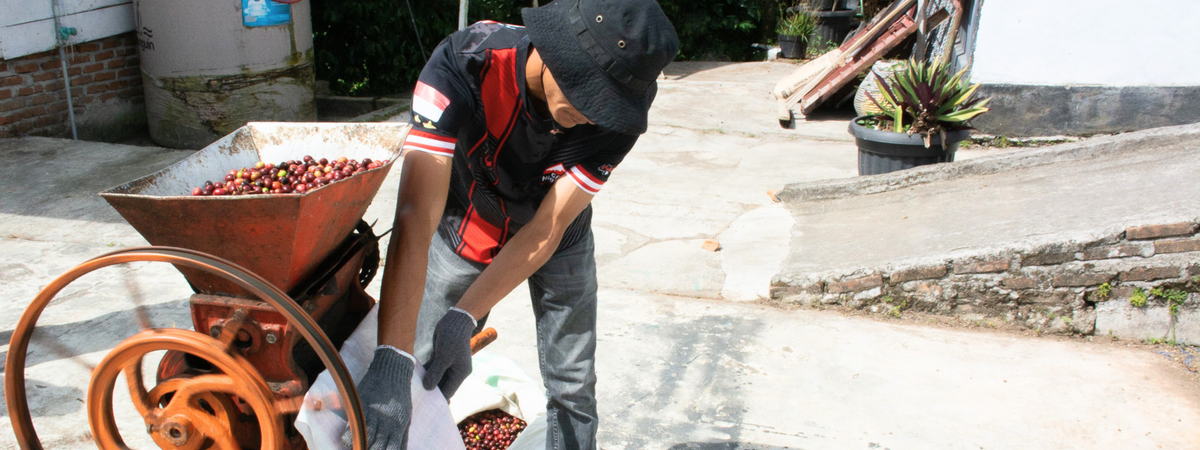
After harvesting, the coffee cherries are pulped and usually fermented or washed to remove the remaining fruit. The parchment coffee is then partially dried, often to around 30–40% moisture, before the parchment layer is removed while the bean is still soft and moist. The exposed green coffee is then dried further until it reaches a moisture level suitable for storage and export.
This differs from a conventional washed process, where coffee remains protected by its parchment until it has been fully dried. Removing the parchment earlier allows the coffee to dry more quickly, an important advantage in regions where frequent rain and high humidity can make traditional drying difficult.
Wet hulling also has a noticeable influence on the character of the coffee. The process is commonly associated with the heavy body, low acidity and earthy, spicy character found in many Sumatran coffees. Depending on the coffee and how carefully it is processed, the cup can also show dark chocolate, herbs, tobacco, dried fruit and sweet spice.
Although wet hulling is sometimes described simply as an Indonesian tradition, it is also a practical system shaped by local climate, infrastructure and the way coffee moves between smallholder farmers, collectors and mills. For coffees from the Gayo Highlands, it remains an important part of both the production system and the distinctive style of coffee the region is known for.